
Why Your SPIFFs Stop Working After 2 Weeks
You've run this play before. Pipeline looks soft heading into the last month of the quarter. Someone proposes a SPIFF: close a deal this week, earn a $500 bonus. Maybe it's $1,000 for a new logo. Maybe it's a weekend getaway for the top closer.
Week one: energy is high. Reps are pushing deals, updating pipelines, booking meetings. The Slack channel is buzzing. Your manager's manager notices and asks what changed.
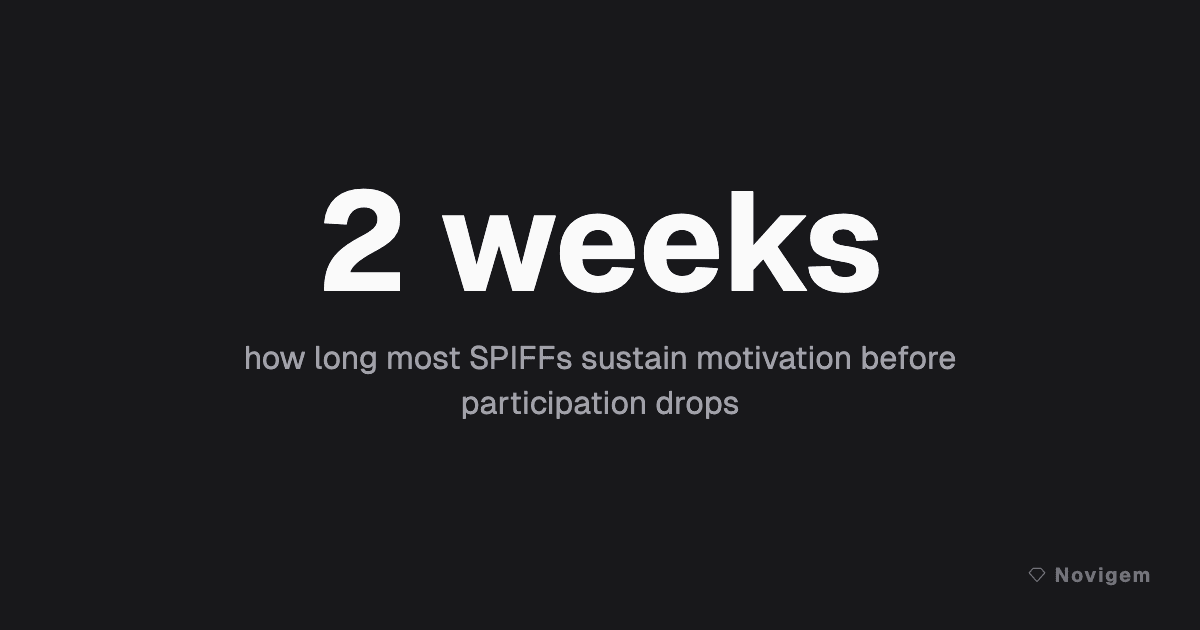
Week two: participation drops by half. The early leaders are still engaged, but the middle of the pack has mentally checked out. The prize feels out of reach for most of the team.
Week three: crickets. The pipeline looks exactly like it did before. The SPIFF cost you $5,000 and produced a temporary blip that's already fading in the rearview mirror.
The patternWeek 1: energy is high, reps are pushing deals. Week 2: participation drops by half. Week 3: crickets. The pipeline looks exactly like it did before.
The behavioural science behind the fade
SPIFFs aren't broken as a concept. The problem is how most teams run them.
The novelty wears off first. The initial spike comes from the excitement of something new, not from the incentive itself. Your brain habituates to any stimulus. By day ten, the SPIFF is background noise, another thing on the wall next to the Q3 targets poster nobody reads anymore.
Then the goal becomes unreachable for most reps. After the first week, the leaderboard tells a story: two or three people are dominating. Everyone else does the math and checks out. Peer comparison only drives effort when people believe they can realistically improve their standing (Festinger, 1954). A leaderboard with a runaway leader does the opposite.
And the reward is too far away. A SPIFF that pays out at the end of the quarter creates a 6-12 week gap between behaviour and reward. That's too long. Delayed reinforcement produces weaker behaviour change than immediate reinforcement (Skinner, 1953). A bonus three months from now doesn't change what a rep does on Tuesday afternoon.
What sustained motivation actually looks like
Specific, challenging, time-bound goals outperform open-ended ones (Locke & Latham, 1990). Short-term SPIFFs can create real urgency. The evidence supports that. But they need to be designed differently than most teams run them.
Length matters. 1-2 weeks maximum. Long enough to build momentum, short enough that the finish line stays visible. A two-week sprint where every rep feels they have a shot beats a quarter-long marathon where only the top 3 are engaged.
The leaderboard should reset every Monday. Last week's winner has no advantage this week. The SAP Sales Challenge used exactly this kind of structured, multi-tier competition and measured a 32% sales productivity improvement (Ahmed, 2025). Fresh starts keep more people in the game.
32% Sales productivity improvement from structured, multi-tier competition with weekly resets. Not a one-off quarterly contest. SAP Sales Challenge (Ahmed, 2025)Then there's timing. Points, badges, and recognition delivered the moment the behaviour happens, not at a team meeting two weeks later. Immediate feedback reinforces the behaviour. Delayed feedback is just a nice-to-have.
You also want to target behaviours, not just outcomes. "Close more deals" is vague and rewards only the final step. The leading indicators are better targets: log a same-day follow-up, add contact roles to an opportunity, move a deal to the next stage with a valid next step. Those are the behaviours that lead to closed deals, and the ones reps can control today.
A single metric (most calls, most revenue) is easy to game and only motivates one type of rep. Combining individual achievements (streaks, badges) with team competitions (group targets) and peer recognition (public shout-outs) gives different people different ways to engage. The majority of 24 peer-reviewed gamification studies found positive effects, but results depend on design and context (Hamari et al., 2014).
And the moment your SPIFF depends on someone manually updating a spreadsheet on Friday afternoon, participation drops. Reps need real-time visibility into their progress. If they can't see where they stand right now, the contest doesn't exist for them.
The real alternative: sustainable motivation systems
SPIFFs are a tool, not a strategy. They work for short bursts of targeted activity. But if you're running a SPIFF every month to hit numbers, you don't have a motivation system. You have an expensive habit.
None of that means never run one. A SPIFF is the right tool for a genuine short sprint, and most of them fail on execution before the behavioural problem in this post ever gets a chance to bite. If you have one planned, here is how to structure a sales SPIFF in Salesforce properly: the trigger, the tracking, and the payout timing that decide whether it lands at all.
The alternative is a permanent layer that runs in the background: points for the daily behaviours that matter, streaks that reward consistency, leaderboards that reset weekly so nobody checks out. Not a contest that starts and stops. A system that's always on.
Think of it like diet vs. nutrition. A SPIFF is a crash diet: dramatic short-term results, then you rebound. A motivation system is a nutrition plan. Less exciting day-to-day, but it changes the underlying behaviour.
Novigem replaces your SPIFF spreadsheets with always-on gamification inside Salesforce. See how quality-weighted KPIs work, calculate your ROI, or read the complete Salesforce gamification guide and the sales gamification statistics.